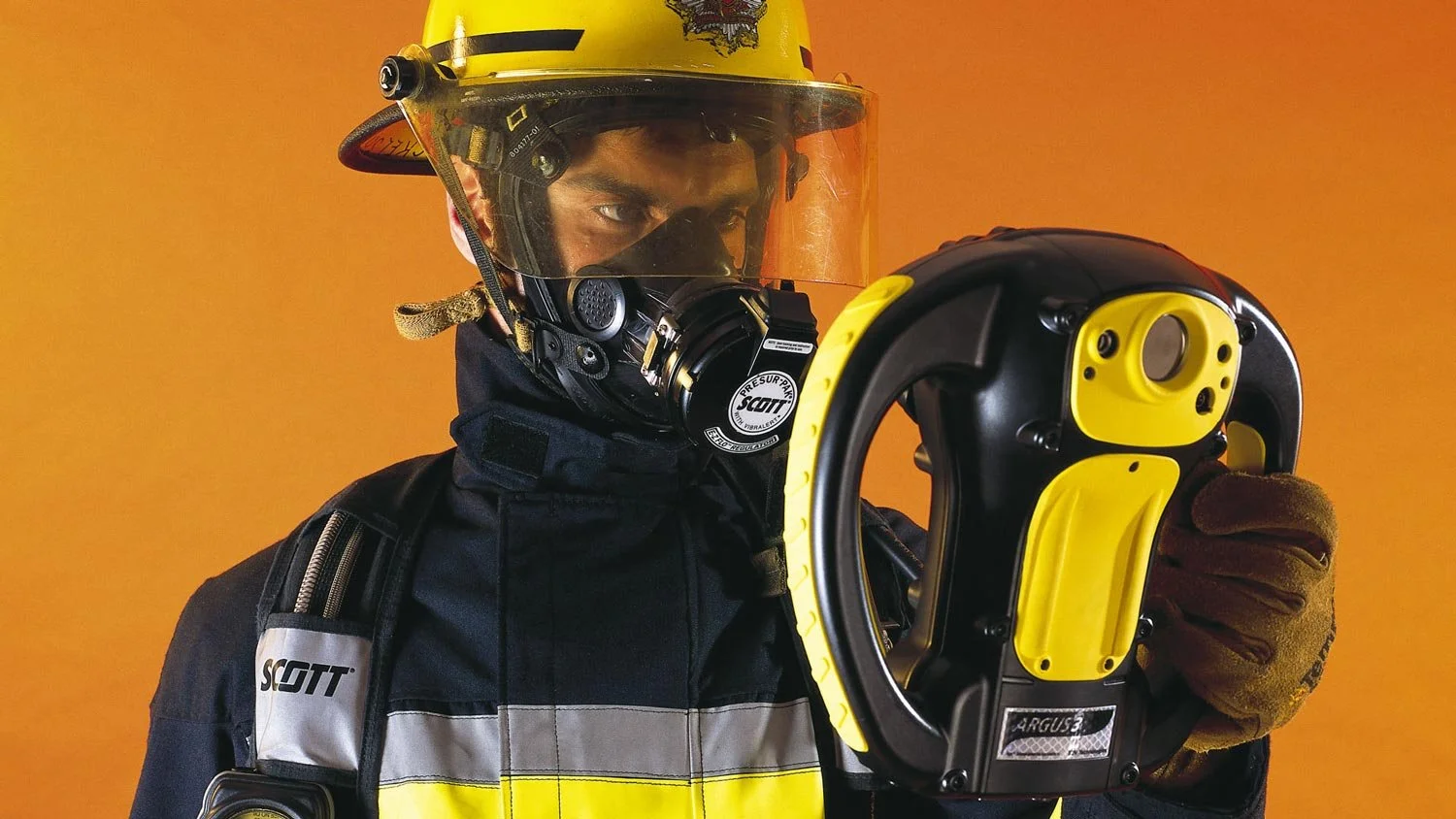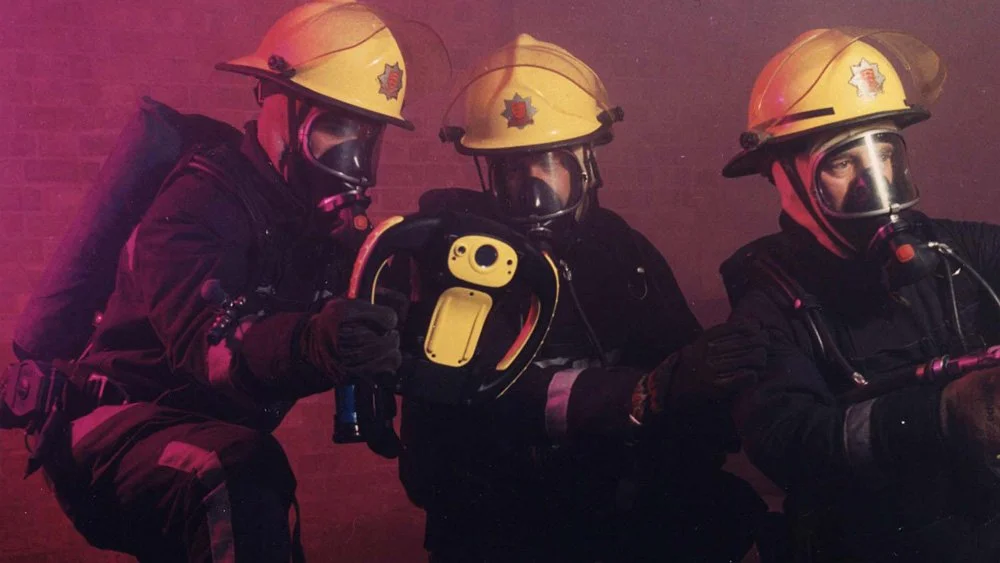


E2V asked Alloy to design a next-generation thermal imaging camera for use in extreme emergency conditions. To fully understand real-world firefighter needs, our lead designer trained alongside active fire crews—gaining first-hand insight into visibility, handling, and decision-making under pressure. These insights directly informed the product’s architecture, ergonomics, and interaction design.
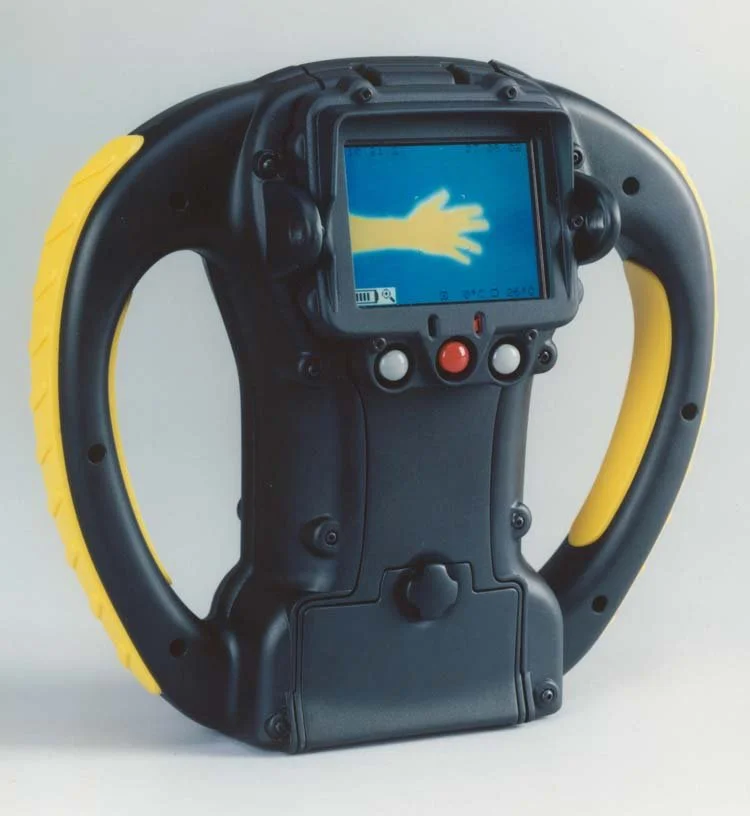
Outcome: A compact, rugged thermal imaging camera with dual-handle ergonomics for stability, protection, and safe handover in high-stress environments—drop-tested to industry standards and recognised with multiple design awards for its life-saving, user-centred performance.
Sales increase
Twenty-two percent sales increase supported by the launch of the next-generation thermal imaging camera.Temperature capability
Designed for extreme environments with operating use cases up to 1000°C temperature exposure conditions.Improved durability
Twenty percent improvement in durability achieved through ruggedised architecture, protective geometry, and drop-test-led development.E2V develop advanced technologies for the defence and emergency services industries. Their IP can be found in the Hubble telescope and in oxygen monitoring devices used by firefighters. We worked with E2V to develop a new digital Thermal Imaging Camera in 2001.
The digital nature of the device provided us with opportunities to optimise the form around the user. To understand how to best do this, we sent the Senior Designer to train as a fireman. Over several weeks, he observed and role-played different contexts, use-cases and interactions to understand the requirements and define device attributes that would deliver a better experience for the user and outcome for the challenge. A full digital and hardware service was needed on this project with large amounts of user testing - an area of expertise for the Alloy team.
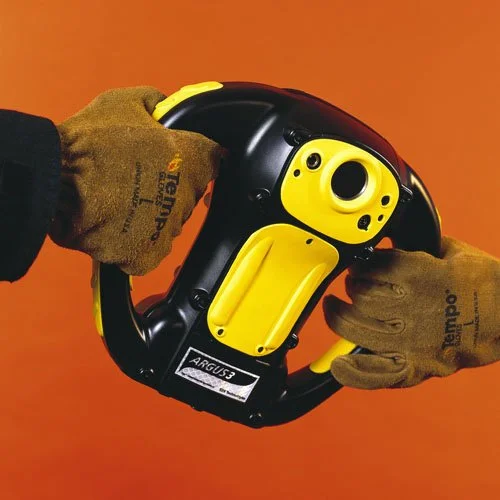
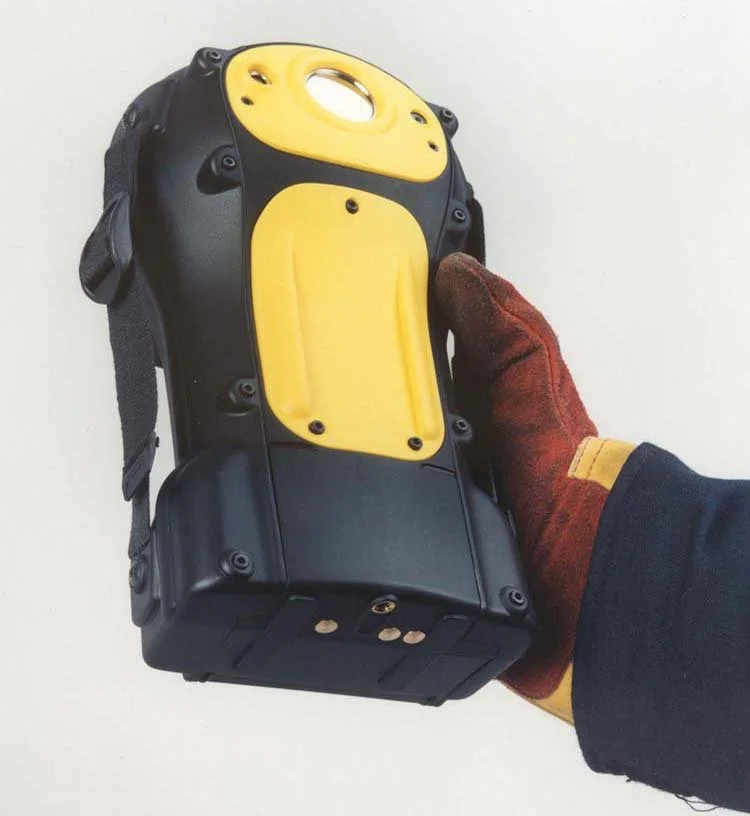
The research identified 2 key attributes that defined the solution. Firstly, that the device was strapped to the chest as they crawled into a burning room, so the depth of the device was critical. Secondly, that they shared the device between 2 people once inside the room. The ‘handover’ process was critical, and was conducted using protective clothing inside a room filled with smoke. See other work by Alloy on the professional industry, though our Work page. The chosen solution provided handles to enhance stability when in use and allow a ‘positive’ handover experience. The handles also helped to protect the device when dropped, and to exceed drop test standards applied to such rugged products.